

As the weather turns chilly, there’s nothing more comforting than indulging in a delicious Greek meal. I’ve curated a list of 11 authentic recipes that bring the flavors of the Mediterranean straight to your kitchen. From the classic moussaka to the zesty lemon garlic chicken souvlaki, each dish promises a unique and delightful experience. If you’re looking to cozy up with meals that warm the heart, let’s explore these mouthwatering options together.
Classic Moussaka
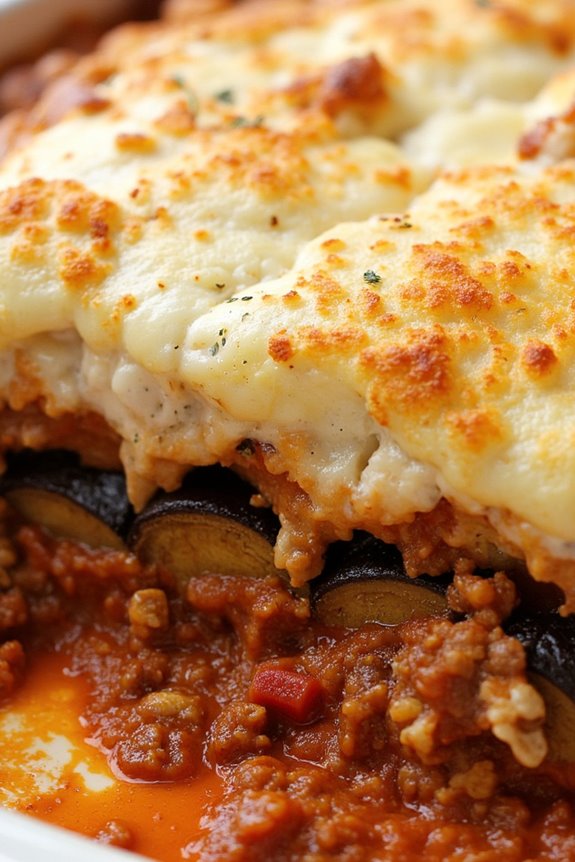
Classic Moussaka is a quintessential Greek dish that harmoniously blends layers of eggplant, spiced meat, and creamy béchamel sauce. This hearty and flavorful casserole is often referred to as a comfort food staple in Greek households.
Traditionally made with lamb or beef, the meat is seasoned with aromatic spices such as cinnamon and nutmeg, adding depth and warmth to the dish. The eggplant, which is sliced and baked until tender, provides a rich, savory base, while the creamy béchamel topping creates a luxurious finish.
Preparing Moussaka may require some time, but the end result is well worth the effort. Each layer contributes to a delightful combination of textures and flavors that will transport you straight to the sunny shores of Greece.
Whether you’re hosting a dinner party or enjoying a family meal, Classic Moussaka is sure to impress and please the palate of everyone at the table.
Ingredients (serving size: 4-6 people):
- 2 medium eggplants, sliced into 1/2-inch rounds
- Salt, for sprinkling
- 1 lb ground beef or lamb
- 1 onion, finely chopped
- 2 cloves garlic, minced
- 1 can (14 oz) diced tomatoes
- 2 tbsp tomato paste
- 1 tsp dried oregano
- 1/2 tsp ground cinnamon
- 1/4 tsp ground nutmeg
- 1/2 cup red wine (optional)
- 1/4 cup olive oil
- Fresh parsley, chopped (for garnish)
- 4 cups béchamel sauce (see additional recipe below)
- 1 cup grated Parmesan cheese
Cooking Instructions:
1. Prepare the Eggplant: Start by preheating your oven to 400°F (200°C). Arrange the sliced eggplant on a baking sheet and sprinkle both sides with salt. Allow them to sit for about 30 minutes to draw out excess moisture and bitterness.
After 30 minutes, rinse the slices under cold water and pat them dry with paper towels.
2. Cook the Eggplant: Drizzle olive oil over the eggplant slices and flip them to coat. Bake in the preheated oven for about 25-30 minutes, or until they’re tender and lightly browned. Remove from the oven and set aside.
3. Prepare the Meat Sauce: In a large skillet, heat 2 tablespoons of olive oil over medium heat. Add the chopped onion and sauté until translucent, about 5 minutes. Stir in the minced garlic and cook for an additional minute.
Add the ground meat and cook until browned, breaking it up with a spoon. Drain any excess fat.
4. Add Tomatoes and Spices: To the skillet with the meat, add the diced tomatoes, tomato paste, oregano, cinnamon, nutmeg, and red wine (if using). Stir to combine and let the mixture simmer for about 15 minutes, allowing the flavors to meld.
Season with salt and pepper to taste.
5. Layer the Moussaka: In a greased baking dish, start layering the components. First, place half of the baked eggplant slices on the bottom. Then, spread half of the meat sauce over the eggplant.
Repeat the layers, finishing with the remaining eggplant on top.
6. Prepare the Béchamel Sauce: If you don’t have premade béchamel sauce, you can prepare it by melting 4 tablespoons of butter in a saucepan, adding 4 tablespoons of flour to form a roux, and gradually whisking in 4 cups of milk.
Cook until thickened, then season with salt, pepper, and a pinch of nutmeg.
7. Top with Béchamel and Cheese: Pour the béchamel sauce evenly over the top layer of eggplant and meat. Sprinkle the grated Parmesan cheese evenly over the béchamel.
8. Bake the Moussaka: Bake in the oven at 350°F (175°C) for 45-50 minutes, or until the top is golden and bubbly. Allow the Moussaka to rest for about 15 minutes before serving to help it set.
Extra Tips: When making Classic Moussaka, feel free to experiment with the type of meat or even consider a vegetarian version by substituting the meat with lentils or mushrooms.
Also, for added flavor, consider adding a pinch of red pepper flakes to the meat sauce for a slight kick. Finally, serving Moussaka with a side of Greek salad or crusty bread can complement the dish beautifully. Enjoy your culinary adventure into Greek cuisine!
Lemon Garlic Chicken Souvlaki
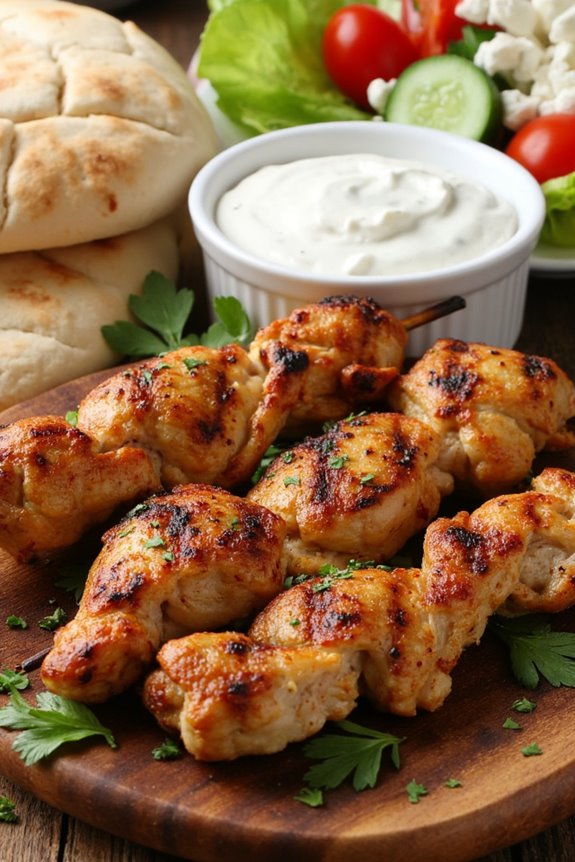
Lemon Garlic Chicken Souvlaki is a delightful Greek dish that captures the essence of Mediterranean flavors. Tender pieces of marinated chicken are threaded onto skewers and grilled to perfection, making for a mouthwatering meal that’s perfect for any occasion. The combination of tangy lemon juice, aromatic garlic, and fresh herbs creates a marinade that infuses the chicken with flavor, guaranteeing each bite is both juicy and satisfying.
Serve it with pita bread, tzatziki sauce, and a side of Greek salad for a complete dining experience. This dish isn’t only delicious but also relatively easy to prepare, making it a great option for both novice and experienced cooks.
Whether you’re hosting a summer barbecue or simply looking for a quick weeknight dinner, Lemon Garlic Chicken Souvlaki is sure to impress your family and friends. With its vibrant flavors and appealing presentation, this dish truly embodies the spirit of Greek cuisine.
Ingredients (Serves 4-6)
- 1.5 lbs boneless, skinless chicken thighs or breasts
- 1/4 cup olive oil
- 1/4 cup fresh lemon juice (about 2 lemons)
- 4 cloves garlic, minced
- 2 teaspoons dried oregano
- 1 teaspoon salt
- 1/2 teaspoon black pepper
- Zest of 1 lemon
- Wooden or metal skewers (if using wooden, soak in water for 30 minutes)
Cooking Instructions
- Prepare the Chicken: Start by cutting the chicken into 1-inch cubes. This size allows for even cooking and makes it easier to skewer. Place the cubed chicken into a large mixing bowl.
- Make the Marinade: In a separate bowl, whisk together the olive oil, lemon juice, minced garlic, dried oregano, salt, black pepper, and lemon zest. This marinade provides the chicken with a burst of flavor.
- Marinate the Chicken: Pour the marinade over the cubed chicken. Toss the chicken to make certain every piece is well coated. Cover the bowl with plastic wrap and refrigerate for at least 1 hour, or up to 4 hours for more intense flavor.
- Preheat the Grill: While the chicken is marinating, preheat your grill to medium-high heat. If using a grill pan, heat it over medium-high heat on the stovetop.
- Skewer the Chicken: Once marinated, thread the chicken pieces onto the skewers, leaving a little space between each piece for even cooking. If using metal skewers, you can skip this step as they don’t need soaking.
- Grill the Souvlaki: Place the skewers on the preheated grill. Cook for about 10-12 minutes, turning occasionally, until the chicken is fully cooked and has nice grill marks. The internal temperature should reach 165°F (75°C).
- Serve: Remove the skewers from the grill and let them rest for a few minutes. Serve the Lemon Garlic Chicken Souvlaki with warm pita bread, tzatziki sauce, and a revitalizing Greek salad for a complete meal.
Extra Tips
For an added layer of flavor, consider marinating the chicken overnight to allow the spices and lemon to penetrate deeper into the meat. Additionally, feel free to customize your souvlaki by adding vegetables such as bell peppers or red onions to the skewers.
These add color and flavor while grilling. Finally, serve with a sprinkle of fresh parsley or mint for a burst of freshness!
Spanakopita (Spinach Pie)
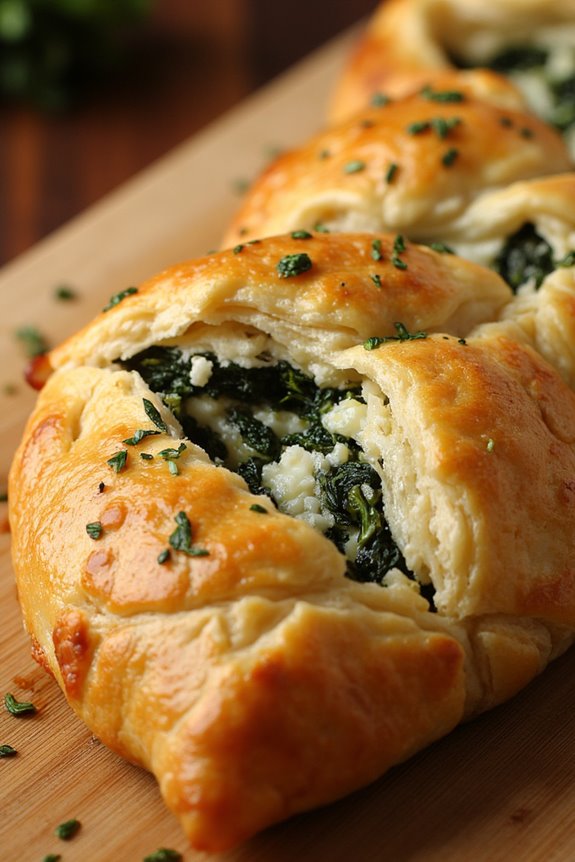
Spanakopita is a traditional Greek pastry that’s loved for its flaky layers of phyllo dough and savory filling. The main ingredient, spinach, is combined with feta cheese and fresh herbs, creating a deliciously rich and nutritious pie. This dish is often served as an appetizer or can be a main course accompanied by a salad.
The preparation of Spanakopita may seem intimidating at first due to the phyllo dough, but with a little practice, you’ll master the art of creating this delightful Greek classic. Making Spanakopita is a wonderful way to bring a taste of Greece into your kitchen. The layers of crisp phyllo pastry contrast beautifully with the tender, flavorful spinach filling.
This dish is perfect for gatherings and can be served warm or at room temperature, making it a versatile addition to any meal. Whether you’re hosting a dinner party or simply enjoying a family meal, Spanakopita is sure to impress and satisfy.
Ingredients (Serves 4-6)
- 1 pound fresh spinach, washed and chopped
- 1 cup feta cheese, crumbled
- 1 cup ricotta cheese
- 1/2 cup onion, finely chopped
- 2 cloves garlic, minced
- 1/4 cup fresh dill, chopped (or 1 tablespoon dried dill)
- 1/4 cup fresh parsley, chopped
- 2 large eggs, beaten
- Salt and pepper to taste
- 1 package phyllo dough (16 oz), thawed
- 1/2 cup unsalted butter, melted
- Olive oil for brushing
Cooking Instructions
- Preheat the Oven: Begin by preheating your oven to 375°F (190°C). This guarantees that the Spanakopita cooks evenly and achieves a golden-brown color.
- Prepare the Filling: In a large skillet over medium heat, add a drizzle of olive oil. Sauté the chopped onions until they become translucent, about 5 minutes. Then, add the minced garlic and continue to cook for another minute. Stir in the chopped spinach and cook until wilted. Remove from heat and let it cool slightly.
- Mix the Filling Ingredients: In a large mixing bowl, combine the cooked spinach mixture with crumbled feta cheese, ricotta cheese, chopped dill, chopped parsley, and beaten eggs. Season with salt and pepper to taste. Mix until all ingredients are well incorporated.
- Prepare the Phyllo Dough: Unroll the phyllo dough and cover it with a damp cloth to prevent it from drying out. Take one sheet of phyllo dough and place it on a clean surface. Brush it lightly with melted butter. Layer another sheet on top and brush again. Repeat this process until you have about 6-8 layers.
- Assemble the Spanakopita: Place a portion of the spinach filling along one edge of the phyllo dough, then fold the sides over the filling. Roll the phyllo tightly to enclose the filling, creating a log shape. Place the rolled Spanakopita on a baking sheet lined with parchment paper. Repeat the process with the remaining phyllo dough and filling.
- Bake the Spanakopita: Brush the tops of the rolled Spanakopita with additional melted butter. Bake in the preheated oven for 30-40 minutes, or until golden brown and crispy.
- Cool and Serve: Once baked, allow the Spanakopita to cool for a few minutes before slicing. Serve warm or at room temperature, garnished with a sprinkle of fresh herbs if desired.
Extra Tips
When working with phyllo dough, it’s crucial to keep it covered with a damp cloth to prevent it from drying out and becoming brittle. If you have leftover filling, you can make mini Spanakopita bites by using smaller pieces of phyllo dough.
Additionally, feel free to customize the filling by adding ingredients such as artichokes or different herbs to suit your taste. Enjoy your homemade Spanakopita with a fresh lemon wedge on the side for added brightness!
Traditional Greek Salad
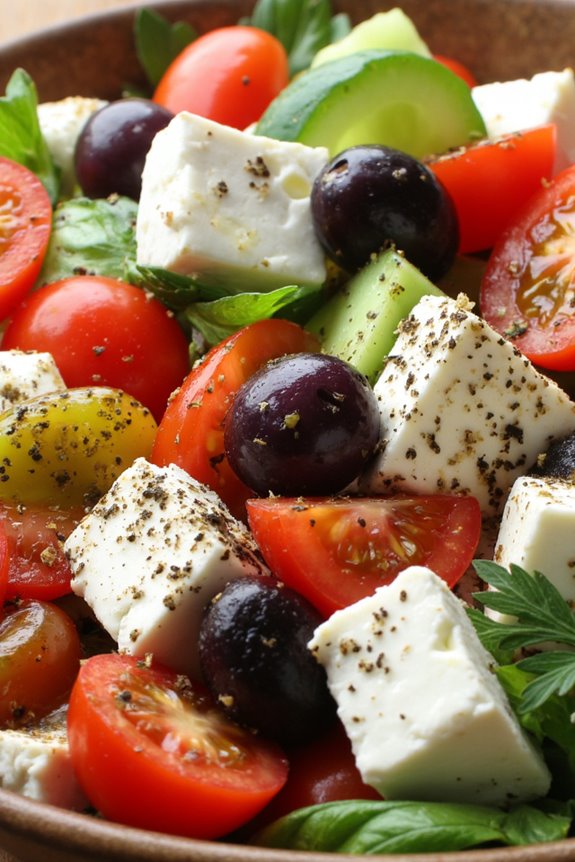
Traditional Greek Salad, also known as Horiatiki, is a vibrant and revitalizing dish that embodies the essence of Mediterranean cuisine. This salad is characterized by its simplicity and the use of fresh, high-quality ingredients. Typically made with juicy tomatoes, crisp cucumbers, and briny olives, a Greek salad is dressed with extra virgin olive oil, oregano, and a sprinkle of feta cheese, bringing together a delightful medley of flavors and textures.
It serves as the perfect accompaniment to a variety of Greek dishes or can be enjoyed on its own as a light meal. The beauty of a Traditional Greek Salad lies in its versatility and the ease of preparation. With just a few ingredients, you can create a colorful and nutritious salad that isn’t only delicious but also packed with vitamins and healthy fats.
This recipe is ideal for serving 4-6 people, making it a great option for family dinners or gatherings with friends.
Ingredients
- 4 ripe tomatoes, chopped
- 1 large cucumber, diced
- 1 bell pepper (red or green), sliced
- 1 small red onion, thinly sliced
- 200g feta cheese, cubed or crumbled
- 150g Kalamata olives, pitted
- 1/4 cup extra virgin olive oil
- 1 tablespoon red wine vinegar (optional)
- 1 teaspoon dried oregano
- Salt and pepper to taste
- Fresh parsley (for garnish, optional)
Cooking Instructions
- Prepare the Vegetables: Start by washing your vegetables thoroughly. Chop the tomatoes into bite-sized pieces, dice the cucumber, and slice the bell pepper and onion. Make sure to keep the sizes uniform to guarantee even distribution in the salad.
- Combine Ingredients: In a large mixing bowl, combine the chopped tomatoes, cucumber, bell pepper, and red onion. Gently toss the vegetables together to mix them evenly.
- Add Olives and Feta: Once the vegetables are combined, add the Kalamata olives and feta cheese to the bowl. If you prefer, you can crumble the feta over the top for a different presentation.
- Prepare the Dressing: In a small bowl, whisk together the extra virgin olive oil, red wine vinegar (if using), dried oregano, salt, and pepper. Adjust the seasoning to your taste.
- Toss the Salad: Drizzle the dressing over the salad mixture and gently toss everything together to guarantee the dressing coats all the ingredients evenly. Be careful not to break the feta too much, as you want to maintain its chunky texture.
- Serve: Transfer the salad to a serving platter or individual bowls. Garnish with fresh parsley if desired. Serve immediately and enjoy!
Extra Tips
For the best flavor, always use fresh, high-quality ingredients. Choose ripe tomatoes and cucumbers, as they’re the stars of the salad.
You can also customize the salad by adding other ingredients such as capers, radishes, or even grilled chicken for a protein boost. Make the salad just before serving to guarantee that the vegetables remain crisp and fresh.
If you have leftovers, store the salad in an airtight container in the refrigerator, but keep in mind that it’s best consumed fresh within a day or two.
Beef Stifado (Greek Stew)

Beef Stifado is a traditional Greek stew that showcases the rich flavors of the Mediterranean. This hearty dish is characterized by tender chunks of beef slow-cooked with aromatic spices, an abundance of onions, and a delightful mix of tomatoes and red wine. The unique combination of flavors makes it a perfect centerpiece for any Greek dinner, providing warmth and comfort for your guests.
The secret to a great Beef Stifado lies in the marination of the meat and the slow cooking process, which allows the flavors to meld beautifully. Often served with crusty bread or over a bed of rice, this stew isn’t only satisfying but also a wonderful way to experience authentic Greek cuisine. Whether you’re preparing it for a family gathering or a special occasion, Beef Stifado is sure to impress.
Ingredients (Serves 4-6):
- 2 pounds beef chuck, cut into 1.5-inch cubes
- 1/4 cup olive oil
- 1 large onion, finely chopped
- 4 cloves garlic, minced
- 3 cups pearl onions, peeled
- 1 can (14 oz) diced tomatoes
- 1 cup dry red wine
- 1/4 cup red wine vinegar
- 2 teaspoons ground cinnamon
- 1 teaspoon allspice
- 2 bay leaves
- Salt and pepper, to taste
- Fresh parsley, chopped (for garnish)
Cooking Instructions:
- Marinate the Beef: In a large bowl, combine the beef cubes with salt, pepper, and a sprinkle of cinnamon. Cover and let marinate for at least 1 hour, or overnight in the refrigerator for deeper flavor.
- Sauté the Onions: In a large pot or Dutch oven, heat the olive oil over medium heat. Add the finely chopped onion and sauté until translucent, about 5-7 minutes. Then add the minced garlic and sauté for an additional minute until fragrant.
- Brown the Beef: Increase the heat to medium-high and add the marinated beef cubes to the pot. Brown the beef on all sides, approximately 8-10 minutes. This step is essential for developing the stew’s flavor.
- Add Pearl Onions: Stir in the pearl onions and cook for another 5 minutes, allowing them to caramelize slightly.
- Deglaze the Pot: Pour in the red wine and red wine vinegar, scraping the bottom of the pot to release any browned bits. This adds depth to the flavor of the stew.
- Incorporate the Tomatoes and Spices: Add the diced tomatoes, allspice, cinnamon, and bay leaves into the pot. Stir well to combine all the ingredients.
- Simmer: Bring the mixture to a boil, then reduce the heat to low. Cover the pot and let it simmer for about 2-3 hours, or until the beef is tender and the flavors have melded together. Stir occasionally, and add water if the stew becomes too thick.
- Garnish and Serve: Once cooked, remove the bay leaves. Serve the Beef Stifado hot, garnished with freshly chopped parsley. Enjoy with crusty bread or over rice.
Extra Tips:
For an added depth of flavor, consider adding a touch of brown sugar or a few whole cloves during the cooking process.
If you prefer a thicker stew, you can mix a tablespoon of cornstarch with a little cold water and stir it into the stew during the last 10 minutes of cooking.
Additionally, allowing the stew to sit for a few hours or even overnight will enhance the flavors, making it even more delicious when reheated.
Dolmadakia (Stuffed Grape Leaves)

Dolmadakia, or stuffed grape leaves, is a classic dish in Greek cuisine that captures the essence of Mediterranean flavors. These delightful parcels are made from tender grape leaves wrapped around a savory filling, typically consisting of rice, herbs, and sometimes minced meat. They’re often served with a side of lemon wedges, which add a bright, zesty note that complements the dish beautifully.
Whether enjoyed as an appetizer or a main course, dolmadakia are a beloved staple that brings a taste of Greece to your table.
Making dolmadakia requires a bit of patience, but the result is well worth the effort. The process involves preparing the filling, carefully wrapping the grape leaves, and then simmering them until tender. This dish can be served warm or at room temperature, making it a versatile option for gatherings or family dinners. With the right ingredients and a little love, you can create a dish that’s sure to impress your family and friends.
Ingredients (Serves 4-6)
- 1 jar (about 16 oz) grape leaves in brine, rinsed and drained
- 1 cup uncooked rice (preferably short-grain)
- 1 medium onion, finely chopped
- 1/4 cup fresh parsley, finely chopped
- 1/4 cup fresh dill, finely chopped
- 1/4 cup olive oil, plus more for drizzling
- 1/2 teaspoon salt
- 1/4 teaspoon black pepper
- 1/2 teaspoon cinnamon (optional)
- 1 lemon, juiced (plus wedges for serving)
- 1 cup vegetable or chicken broth
Cooking Instructions
1. Prepare the Filling: In a large skillet, heat 1/4 cup of olive oil over medium heat. Add the chopped onion and sauté until translucent, about 5 minutes. Stir in the rice, salt, pepper, and cinnamon (if using), and cook for another 2 minutes, allowing the rice to absorb the flavors.
Remove from heat and mix in the parsley and dill. Allow the mixture to cool slightly.
2. Prepare the Grape Leaves: If using jarred grape leaves, rinse them well under cold water to remove excess brine. Lay one grape leaf flat on a clean surface, with the stem side facing you. Place about 1 tablespoon of the rice filling near the base of the leaf and fold the sides over the filling.
Then, roll the leaf tightly from the base to the tip, creating a neat little package. Repeat this process until all the filling is used.
3. Arrange the Dolmadakia: Place the rolled dolmadakia seam-side down in a large pot or deep skillet. Pack them tightly together in a single layer. If there are leftover grape leaves, you can layer them on top of the dolmadakia.
4. Add Liquid and Simmer: Pour the vegetable or chicken broth and lemon juice over the dolmadakia, ensuring they’re mostly covered by the liquid. Drizzle a little olive oil on top.
Place a heatproof plate or lid on top to keep them submerged, then cover the pot and bring to a gentle simmer. Cook for about 45 minutes to 1 hour, or until the rice is tender and the leaves are soft.
5. Serve: Once cooked, remove from heat and let the dolmadakia cool slightly before serving. Serve warm or at room temperature with lemon wedges on the side for squeezing over the top.
Extra Tips
When making dolmadakia, feel free to customize the filling to your taste. You can add ground meat like lamb or beef for a heartier version, or include other herbs such as mint for a different flavor profile.
It’s also helpful to soak the grape leaves in warm water for about 10 minutes if they’re too stiff. Finally, make a larger batch and freeze extras for a quick meal later on; they reheat well and maintain their delicious flavor!
Choriatiki (Village Salad)
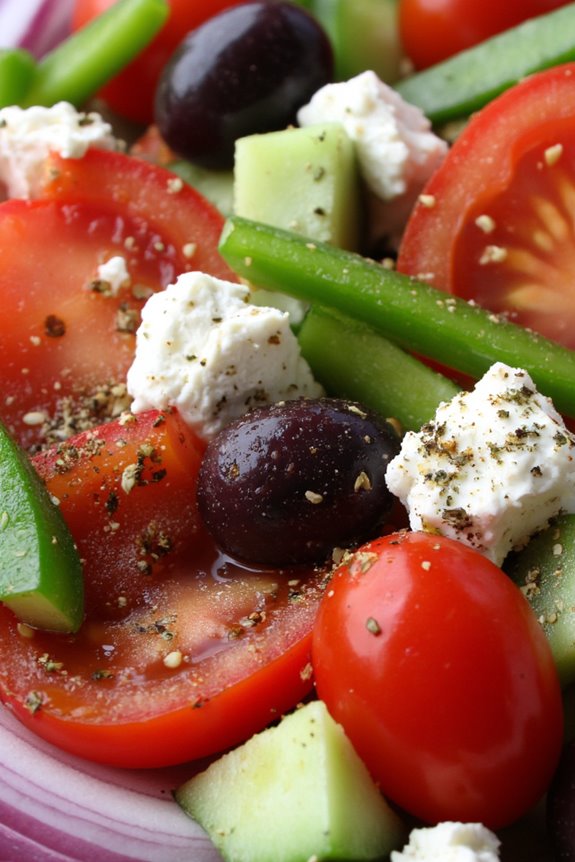
Choriatiki, commonly known as Village Salad, is a quintessential Greek dish that embodies the simplicity and vitality of Greek cuisine. This vibrant salad is characterized by its use of ripe tomatoes, crisp cucumbers, tangy feta cheese, and olives, all brought together with a drizzle of extra virgin olive oil and a sprinkle of oregano.
It’s an invigorating dish perfect for pairing with grilled meats or serving as a light meal on its own. The beauty of Choriatiki lies in its rustic presentation, showcasing the natural colors and textures of the ingredients. It’s a popular choice in Greek tavernas and is often enjoyed during summer months when vegetables are at their peak vitality.
Whether you’re hosting a dinner party or enjoying a quiet meal, this salad is sure to impress with its bold flavors and vibrant appearance.
Ingredients (Serves 4-6)
- 4 medium ripe tomatoes, chopped
- 1 large cucumber, diced
- 1 bell pepper (preferably green), sliced
- 1 small red onion, thinly sliced
- 200g feta cheese, crumbled or in blocks
- 150g Kalamata olives, pitted
- 60ml extra virgin olive oil
- 1 tablespoon red wine vinegar (optional)
- Salt and freshly ground black pepper, to taste
- 1 teaspoon dried oregano
Cooking Instructions
- Prepare the Vegetables: Start by washing all your vegetables thoroughly. Chop the tomatoes into bite-sized pieces, dice the cucumber, and slice the bell pepper into thin strips. Thinly slice the red onion to add a touch of sharpness to the salad.
- Combine the Ingredients: In a large salad bowl, add the chopped tomatoes, diced cucumber, sliced bell pepper, and red onion. Mix gently with a spoon to combine all the vegetables evenly.
- Add the Feta and Olives: Crumble or cut the feta cheese into large chunks and add it to the bowl. Then, add the Kalamata olives. These ingredients will contribute to the salad’s distinct flavor profile and texture.
- Dress the Salad: Drizzle the extra virgin olive oil over the salad, followed by the optional red wine vinegar. Season with salt, freshly ground black pepper, and sprinkle the dried oregano on top.
- Toss and Serve: Gently toss the salad to combine all the flavors, ensuring that the dressing coats the vegetables evenly. Serve immediately or let it sit for a few minutes to allow the flavors to meld together before serving.
Extra Tips
For the best flavor, use ripe, in-season tomatoes and high-quality extra virgin olive oil. Feel free to customize the salad according to your preferences; adding capers, or even some chopped parsley, can enhance the vitality.
If you prefer a creamier texture, you can mix the feta into the dressing before adding it to the salad. Choriatiki is best served fresh, but it can also be made ahead of time and stored in the refrigerator for a few hours. Just make sure to toss it gently again before serving to revive the flavors!
Pastitsio (Greek Pasta Bake)

Pastitsio, often referred to the Greek version of lasagna, is a comforting and satisfying dish that beautifully blends layers of pasta, rich meat sauce, and creamy béchamel. This traditional Greek casserole is perfect for gatherings or family dinners, offering a hearty meal that’s both delicious and filling. The combination of flavors and textures creates a memorable experience for anyone who enjoys Greek cuisine.
Making Pastitsio requires a bit of time and effort, but the results are well worth it. The layers of pasta, seasoned ground meat, and smooth béchamel sauce come together to form a dish that isn’t only visually appealing but also incredibly flavorful. With its roots in Greek culinary tradition, Pastitsio is a dish that warms the heart and brings people together around the dinner table.
Ingredients (Serves 4-6):
- 1 pound (450g) of pasta (preferably tubular pasta like penne or ziti)
- 1 pound (450g) of ground beef or lamb
- 1 onion, finely chopped
- 2 cloves of garlic, minced
- 1 can (14 oz) of diced tomatoes
- 2 tablespoons of tomato paste
- 1 teaspoon of dried oregano
- 1 teaspoon of cinnamon
- Salt and pepper to taste
- ¼ cup of olive oil
- 2 cups of milk
- 4 tablespoons of unsalted butter
- 4 tablespoons of all-purpose flour
- 2 large eggs
- 1 cup of grated cheese (Kefalotyri or Parmesan, for topping)
- Fresh parsley (for garnish, optional)
Cooking Instructions:
- Cook the Pasta: Begin by bringing a large pot of salted water to a boil. Add the pasta and cook until al dente, according to package instructions. Drain the pasta and set it aside to cool slightly. This will prevent it from becoming mushy in the oven.
- Prepare the Meat Sauce: In a large skillet, heat the olive oil over medium heat. Add the chopped onion and sauté until translucent, about 5 minutes. Stir in the minced garlic and cook for an additional minute until fragrant. Add the ground beef or lamb, breaking it up with a spoon, and cook until browned. Incorporate the diced tomatoes, tomato paste, oregano, cinnamon, and season with salt and pepper. Let the sauce simmer for about 15-20 minutes, allowing the flavors to meld together.
- Make the Béchamel Sauce: In a saucepan, melt the butter over medium heat. Once melted, whisk in the flour and cook for about 1-2 minutes to create a roux. Gradually add the milk, whisking constantly until the mixture thickens and is smooth. Remove from heat and let it cool slightly before whisking in the eggs and a pinch of salt.
- Assemble the Pastitsio: Preheat your oven to 350°F (175°C). In a large baking dish, layer half of the cooked pasta on the bottom. Spread the meat sauce evenly over the pasta, followed by the remaining pasta on top. Pour the béchamel sauce over the entire dish, spreading it evenly, and sprinkle the grated cheese on top.
- Bake the Pastitsio: Place the baking dish in the preheated oven and bake for about 45-50 minutes, or until the top is golden brown and bubbly. Once done, remove it from the oven and let it rest for 10-15 minutes before slicing it into squares.
- Serve and Enjoy: Garnish with fresh parsley if desired, and serve warm. Enjoy this delightful Greek dish with a side salad or crusty bread.
Extra Tips:
When preparing Pastitsio, be sure to allow the dish to rest before slicing. This helps the layers set and makes serving easier. You can also customize the meat sauce with additional vegetables or spices to suit your taste.
For a richer flavor, consider using a combination of meats or adding a splash of red wine to the sauce. If you have leftovers, Pastitsio reheats beautifully, making it a great option for meal prep or a cozy next-day meal.
Shrimp Saganaki
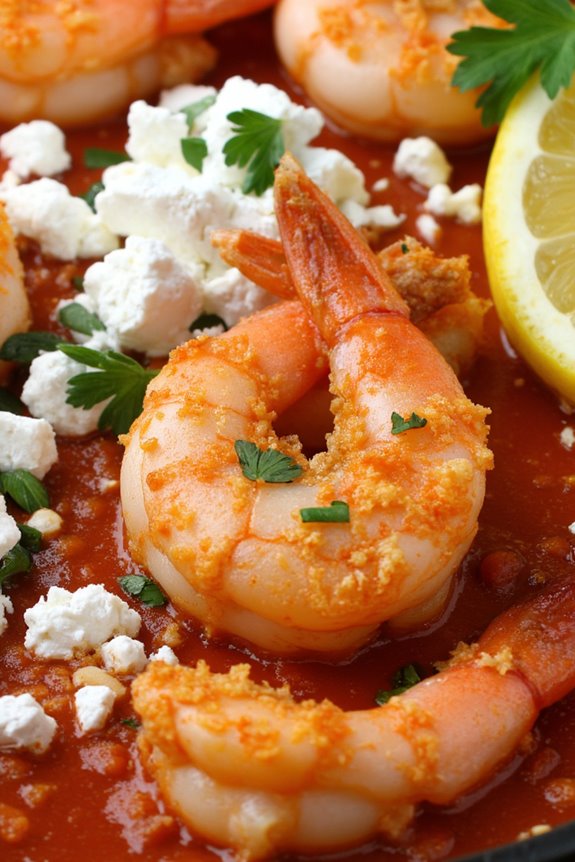
Shrimp Saganaki is a classic Greek dish that perfectly showcases the vibrant flavors of the Mediterranean. This dish features succulent shrimp cooked in a rich tomato sauce, spiced with fragrant herbs, and finished with a generous amount of feta cheese. The combination of these elements results in a delightful meal that’s both comforting and invigorating, making it an ideal choice for a family dinner or a special gathering with friends.
Serve it alongside crusty bread or over a bed of rice to soak up the delicious sauce, and you’ll have a meal that’s sure to impress.
The origins of Saganaki can be traced back to the traditional Greek appetizer, which involves frying cheese in a small pan, but this shrimp version has become a beloved main dish. The sweet and briny flavor of the shrimp melds perfectly with the acidity of the tomatoes and the creaminess of the feta, creating a dish that’s not only delicious but also visually appealing.
Whether you’re an experienced cook or just starting out, Shrimp Saganaki is a dish that’s straightforward to prepare yet delivers a taste of the Greek islands right in your own kitchen.
Ingredients (Serves 4-6):
- 1 lb large shrimp, peeled and deveined
- 2 tablespoons olive oil
- 1 medium onion, finely chopped
- 3 cloves garlic, minced
- 1 can (14 oz) crushed tomatoes
- 1 teaspoon dried oregano
- 1 teaspoon sugar
- Salt and pepper, to taste
- 1 cup feta cheese, crumbled
- 2 tablespoons fresh parsley, chopped (for garnish)
- Lemon wedges (for serving)
Cooking Instructions:
- Sauté the Onions and Garlic: In a large skillet, heat the olive oil over medium heat. Add the finely chopped onion and sauté for about 5 minutes or until it becomes translucent. Then, add the minced garlic and cook for an additional 1-2 minutes until fragrant. This step builds the flavor base for your dish.
- Add the Tomatoes and Seasoning: Pour in the crushed tomatoes and add the dried oregano, sugar, salt, and pepper. Stir well to combine all the ingredients. Let the sauce simmer for about 10 minutes, allowing the flavors to meld and the sauce to thicken slightly.
- Cook the Shrimp: Add the peeled and deveined shrimp to the pan, making sure they’re evenly distributed in the sauce. Cook for about 5-7 minutes or until the shrimp turn pink and are cooked through. Be careful not to overcook the shrimp, as they can become rubbery.
- Incorporate the Feta: Once the shrimp are cooked, gently stir in the crumbled feta cheese. Allow it to melt slightly into the sauce, creating a creamy texture. This adds a rich and tangy flavor that complements the shrimp beautifully.
- Serve and Garnish: Remove the skillet from heat and transfer the Shrimp Saganaki to a serving dish. Garnish with freshly chopped parsley and serve with lemon wedges on the side for a zesty finish. Pair it with crusty bread or rice to soak up the delicious sauce.
Extra Tips: When preparing Shrimp Saganaki, it’s important to use fresh shrimp for the best flavor and texture. If using frozen shrimp, verify they’re fully thawed and patted dry before cooking.
Additionally, feel free to experiment with the dish by adding ingredients like bell peppers or olives for extra flavor. If you prefer a spicier kick, consider adding a pinch of red pepper flakes to the sauce. Enjoy this delightful dish straight from the skillet for a truly authentic dining experience!
Gigantes Plaki (Giant Beans)
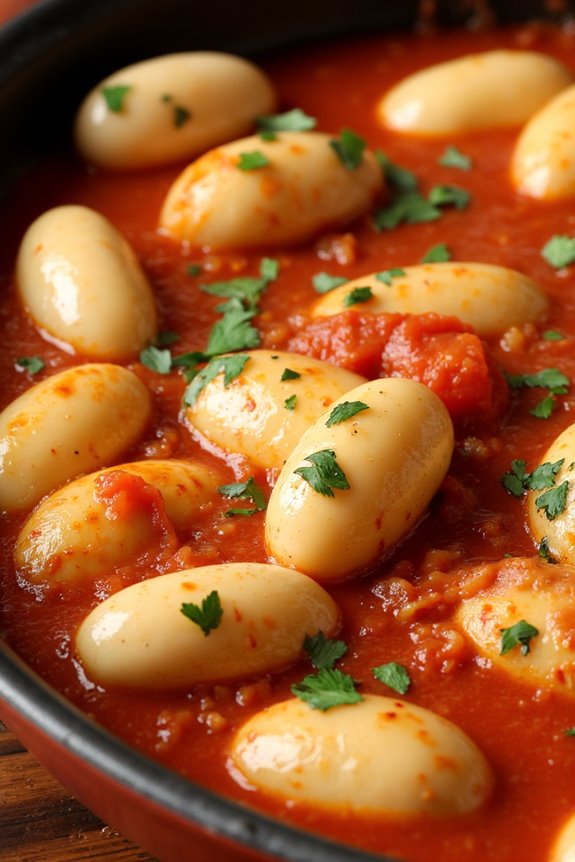
Gigantes Plaki is a traditional Greek dish that showcases the rich flavors of the Mediterranean. This hearty and comforting dish features large white beans, known as gigantes, which are slow-cooked in a savory tomato sauce with herbs and spices. Often served as a main dish or a side, Gigantes Plaki isn’t only delicious but also packed with nutrients, making it a favorite among vegetarians and meat-eaters alike.
The slow cooking process allows the beans to absorb the flavors of the sauce, resulting in a dish that’s both wholesome and satisfying.
To prepare Gigantes Plaki, you’ll need to start with dried giant beans, which require soaking before cooking. Once softened, the beans are combined with a flavorful mixture of onions, garlic, tomatoes, and aromatic herbs. The dish is typically baked in the oven, allowing the ingredients to meld together beautifully. The result is a vibrant dish that can be enjoyed hot or at room temperature, perfect for sharing with family and friends.
Ingredients (Serves 4-6):
- 1 cup dried gigante beans (or large white beans)
- 1/4 cup olive oil
- 1 large onion, finely chopped
- 3 cloves garlic, minced
- 1 can (14 oz) crushed tomatoes
- 1 tablespoon tomato paste
- 1 teaspoon dried oregano
- 1 teaspoon dried thyme
- 1/2 teaspoon paprika
- Salt and pepper, to taste
- Fresh parsley, chopped (for garnish)
Cooking Instructions:
- Soak the Beans: Begin by rinsing the gigante beans under cold water. Place them in a large bowl and cover with plenty of water. Soak the beans overnight or for at least 8 hours to soften them. This step is essential for ensuring that the beans cook evenly and thoroughly.
- Prepare the Beans for Cooking: After soaking, drain the beans and rinse them again. Transfer the beans to a large pot, cover with fresh water, and bring to a boil over medium-high heat. Reduce the heat to low and let them simmer for about 45 minutes to 1 hour, or until the beans are tender but not mushy. Drain and set aside.
- Sauté the Aromatics: In a large oven-safe skillet or pot, heat the olive oil over medium heat. Add the chopped onion and sauté for about 5 minutes, until it becomes translucent. Then, add the minced garlic and continue to sauté for another minute, being careful not to burn the garlic.
- Combine the Ingredients: Stir in the crushed tomatoes, tomato paste, oregano, thyme, paprika, salt, and pepper into the skillet with the sautéed onions and garlic. Cook for about 5 minutes, allowing the flavors to meld together.
- Add the Beans: Gently fold the cooked gigante beans into the tomato mixture, ensuring they’re well coated with the sauce. If needed, add a little water to achieve your desired consistency.
- Bake the Dish: Preheat your oven to 375°F (190°C). Transfer the skillet or pot to the oven and bake for 30-40 minutes, or until the top is slightly browned and the sauce is bubbling.
- Serve and Garnish: Once done, remove the dish from the oven and allow it to cool for a few minutes. Garnish with freshly chopped parsley before serving. Gigantes Plaki can be served warm, at room temperature, or even cold.
Extra Tips:
When cooking Gigantes Plaki, feel free to customize the dish by adding other ingredients such as diced carrots, celery, or bell peppers to the sauté for added flavor and texture.
Additionally, for a touch of creaminess, you can sprinkle some feta cheese on top before serving. This dish can also be made ahead of time and reheats beautifully, making it a perfect option for meal prepping or hosting gatherings.
Enjoy this delicious Mediterranean staple as part of a larger feast or as a delightful standalone meal!
Baklava for Dessert
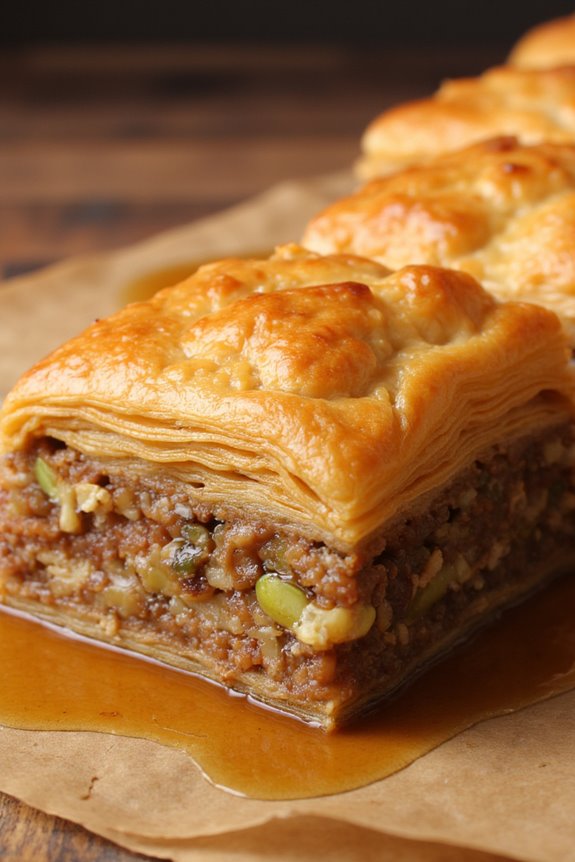
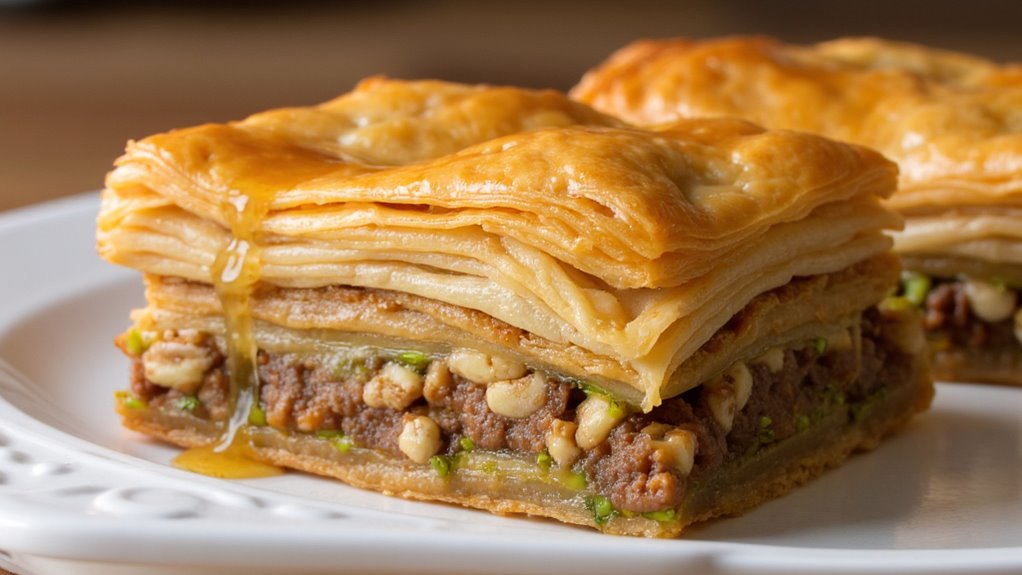
Baklava is a traditional Greek dessert that captures the essence of Mediterranean flavors with its rich layers of flaky pastry, sweet nuts, and aromatic spices. This delightful treat is a celebration of textures, combining the crunch of phyllo dough with the soft, sweet, and nutty filling.
Often drizzled with a honey syrup that seeps into the layers, baklava is a luxurious way to end a Greek dinner and is certain to impress your guests.
Making baklava may seem intimidating, but with a little patience and attention to detail, you can create an impressive dessert that tastes as good as it looks. The key to a perfect baklava is in the layering and the balance of flavors. Once you master this recipe, you’ll find that baklava can be a lovely addition to any gathering, bringing a taste of Greece to your table.
Ingredients (Serves 4-6)
- 1 package (16 oz) of phyllo dough, thawed
- 2 cups walnuts, finely chopped
- 1 cup pistachios, finely chopped
- 1 teaspoon ground cinnamon
- 1 cup unsalted butter, melted
- 1 cup sugar
- 1 cup water
- 1 cup honey
- 1 teaspoon vanilla extract
- 1 teaspoon lemon juice
Cooking Instructions
- Prepare the Nut Filling: In a mixing bowl, combine the finely chopped walnuts and pistachios with the ground cinnamon. This mixture will provide the sweet and nutty flavor that characterizes baklava.
- Preheat the Oven: Set your oven to 350°F (175°C) to make certain it’s ready for baking once you assemble the baklava.
- Layer the Phyllo Dough: Take the thawed phyllo dough and carefully unroll it. Cover the phyllo sheets with a damp cloth to prevent them from drying out. Brush a 9×13 inch baking dish with melted butter. Place one sheet of phyllo dough in the dish and brush it with melted butter.
- Continue Layering: Repeat this process, layering 8 sheets of phyllo, brushing each sheet with butter.
- Add the Nut Mixture: Once you have 8 layers of phyllo, sprinkle a thin layer of the nut mixture over the phyllo. Spread it evenly across the surface.
- Continue Layering: Add 2 more sheets of phyllo, brushing each with butter. Repeat the process of adding the nut mixture followed by 2 sheets of phyllo until all the nuts are used, finishing with a final layer of 8 sheets of phyllo on top, each brushed with melted butter.
- Cut the Baklava: Using a sharp knife, cut the baklava into diamond or square shapes. This will make it easier to serve once baked.
- Bake: Place the baklava in the preheated oven and bake for approximately 45-50 minutes, or until the top is golden brown and crispy.
- Prepare the Syrup: While the baklava is baking, combine sugar, water, honey, vanilla extract, and lemon juice in a saucepan. Bring to a boil and then reduce heat to a simmer for about 10 minutes until slightly thickened.
- Soak the Baklava: Once the baklava is finished baking, remove it from the oven and immediately pour the hot syrup over the hot baklava. Allow it to soak for at least 4 hours, or ideally overnight, to let the flavors meld and the syrup fully absorb.
Extra Tips
When making baklava, be sure to keep the phyllo dough covered with a damp cloth while you work to prevent it from drying out.
You can experiment with different nuts, such as almonds or hazelnuts, to customize the flavor to your liking. Additionally, for a unique twist, consider adding a splash of rosewater or orange blossom water to the syrup for an aromatic touch.
Serving baklava at room temperature allows it to maintain its texture and flavor. Enjoy your homemade baklava as a sweet conclusion to your Greek dinner!
